

From festivals and outdoor concerts to sporting fixtures, markets and temporary exhibitions, effective lighting is critical to the success and safety of any event. When events extend into the evening or operate overnight, temporary lighting becomes a core part of site planning rather than a finishing touch.
Whether you are lighting a greenfield festival site or a city centre fan zone, understanding your temporary event lighting options will help you balance safety, performance, cost and environmental impact.
Why temporary lighting matters at events
Event lighting is about far more than atmosphere. While stage and decorative lighting create experience, functional site lighting ensures:
- Safe pedestrian movement
- Clear access and egress routes
- Visibility for security and stewarding teams
- Safe vehicle and plant operation during build and breakdown
- Reduced risk of slips, trips and falls
Organisers also have legal duties under health and safety legislation to provide a safe environment for staff, contractors and attendees. Suitable and sufficient lighting forms part of that obligation.
Key areas that require temporary lighting
Most outdoor events require lighting across multiple zones, including:
- Entrance and exit points
- Pedestrian walkways and queuing areas
- Car parks and shuttle drop off zones
- Back of house and production compounds
- Toilet and welfare areas
- Emergency access routes
Each area may require different lighting levels depending on expected footfall, task type and risk profile.
Temporary lighting options for events
There are several common approaches to event site lighting, each suited to different site conditions and operational priorities.
Solar lighting towers
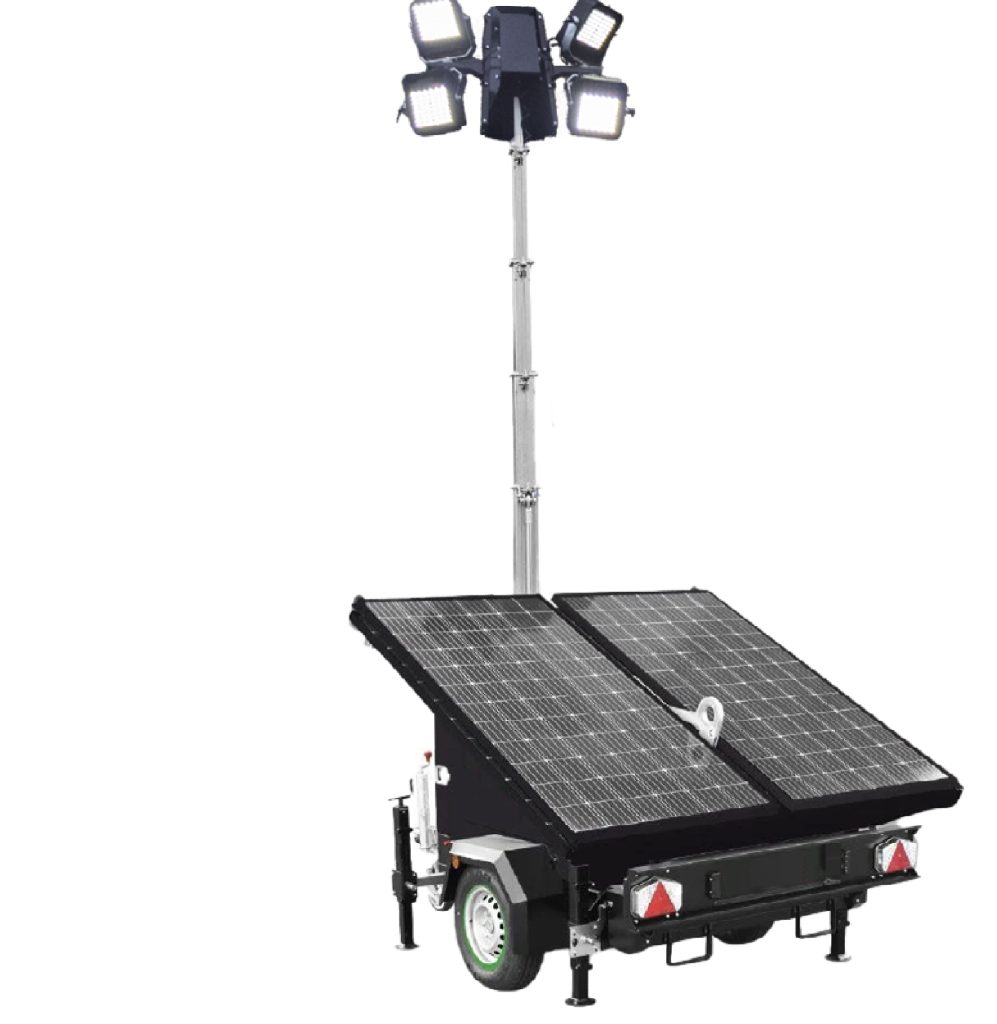
Solar powered lighting towers use photovoltaic panels to charge onboard batteries during daylight hours, powering LED luminaires after dark. These systems are particularly well suited to outdoor events held during spring and summer months when daylight hours are longer.
Advantages:
- Silent operation
- No fuel deliveries
- Reduced carbon emissions
- Lower risk associated with refuelling
- Clean and professional presentation
Solar lighting towers are often used in pedestrian zones, car parks, campsites and perimeter areas where quiet, low emission lighting is a priority.

Diesel generator lighting towers
Diesel lighting towers have traditionally been used for temporary events. They offer high output illumination and are familiar to many event contractors.
Advantages:
- High light output
- Suitable for large open areas
- Established technology
Considerations:
- Noise, particularly during nighttime operation
- Fuel management and refuelling logistics
- Emissions and carbon impact
- Ongoing maintenance during longer events
For multi day or residential area events, noise and environmental impact are increasingly important factors.
Hybrid lighting towers
Hybrid towers combine solar panels, battery storage and a backup generator. The generator runs only when required, significantly reducing fuel consumption compared to traditional diesel units.
Advantages
- Improved reliability during periods of low sunlight
- Reduced fuel use
- Lower noise levels than standard generator towers
Hybrid solutions are useful for longer events or where high lighting demand must be guaranteed regardless of weather conditions.
Battery powered lighting units
Standalone battery lighting can be suitable for smaller events or targeted areas such as entrance gates or pathways. These units are emission free during operation but require planned recharging.
Advantages
- Silent operation
- No on-site emissions
- Compact and easy to position
Considerations
- Limited runtime depending on capacity
- Requires charging strategy
How to choose the right temporary event lighting
Selecting the right lighting solution depends on several factors.
- Event duration – Single evening events may have different requirements compared to multi day festivals.
- Location – Urban and residential settings often require low noise and low emission solutions.
- Power availability – Some sites may have partial mains access for stage and infrastructure, but not for wider site lighting.
- Environmental commitments – Many organisers now publish sustainability plans. Choosing solar or hybrid lighting supports carbon reduction goals and strengthens environmental credentials.
- Site layout and crowd movement – Lighting should be positioned to avoid glare, eliminate deep shadowing and support safe flow of people.
Planning and compliance considerations
Event organisers must also consider:
- Local authority licensing conditions
- Environmental health requirements
- Emergency lighting and contingency planning
- Safe cable management where temporary distribution is used
Lighting should be included within the overall event risk assessment and site plan. Professional suppliers can assist with layout planning to ensure adequate coverage and compliance.
Sustainable temporary lighting for events
Sustainability is becoming central to event planning. Solar and hybrid lighting towers can significantly reduce fuel consumption and noise, particularly on multi day events.
Benefits include:
- Reduced generator runtime
- Lower carbon emissions
- Improved experience for attendees in quieter zones
- Alignment with corporate social responsibility objectives
For greenfield and rural sites, solar lighting also avoids the need for extensive temporary cabling or additional fuel storage.
Conclusion
Temporary lighting for events is a critical component of safety, compliance and overall attendee experience. From diesel and hybrid towers to fully solar powered solutions, organisers have a range of options to suit different site conditions and sustainability goals.
By assessing event duration, location, power access and environmental objectives, you can select a lighting solution that delivers reliable illumination while supporting safe, responsible event delivery.