
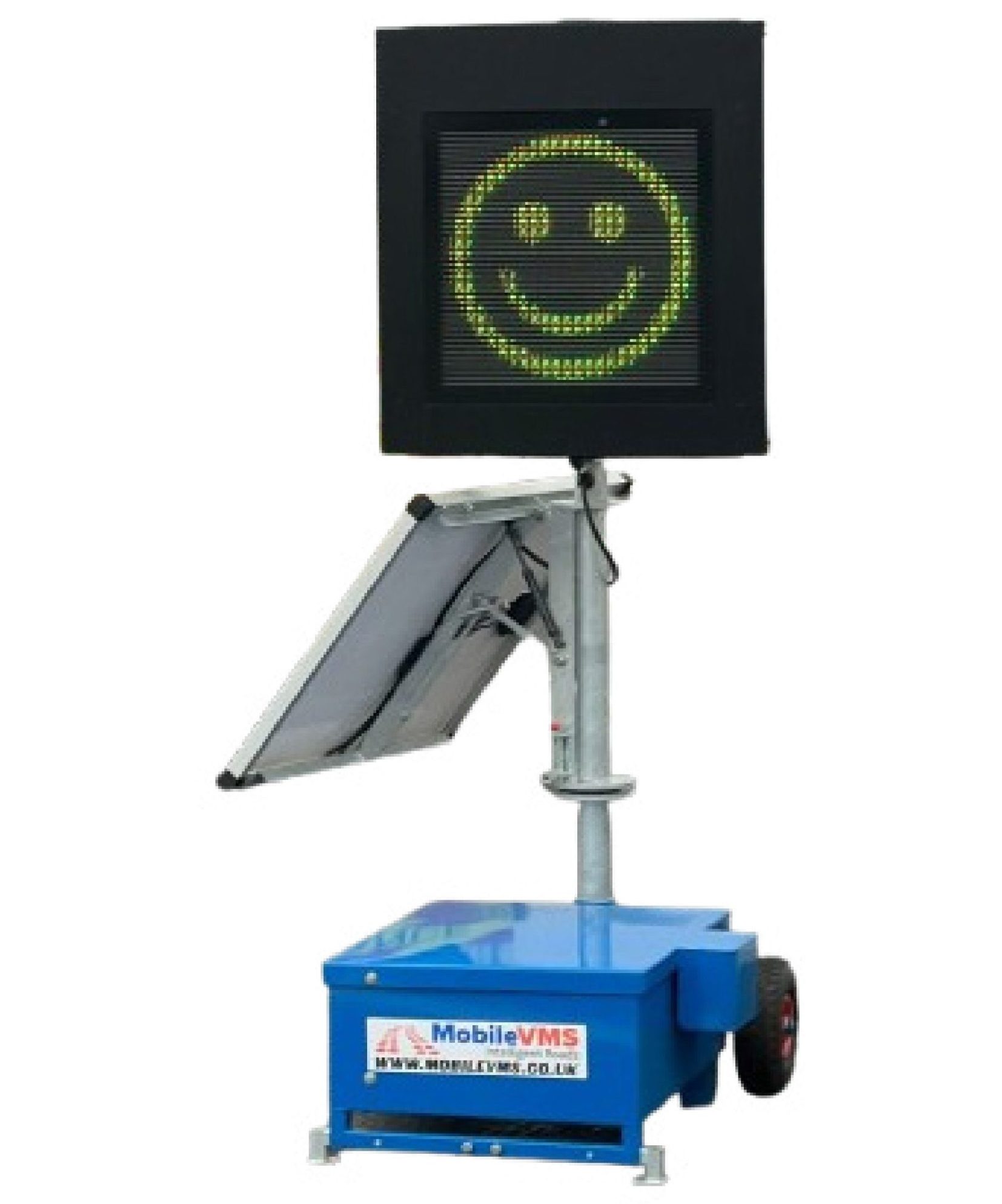
The Mobile SID is designed to display real-time speed information and feedback messages to motorists, reducing speed and creating a safer road environment.
A Mobile SID is a portable Speed Indicator Device that displays a driver’s real-time speed as they approach it.
It is usually mounted on a temporary trailer or lightweight frame and used to slow traffic in areas where speeding is a concern.
It can be used for speed studies near schools, in residential areas or anywhere controlling traffic speed limits has become an issue.
Features:

Combine speed indication
with Happy & Sad faces

2 year warranty
on all electronics

Portable
Safe and easy installation on site
Data logging option
For speed studies
Solar-powered
No engine maintenance, noise or pollution

Stealth
Available with stealth technology

Environmentally friendly
Environmentally friendly and energy efficient

Over speed
Over speed flash mode

Visibility
In all lights and weather conditions

Maintenance
Problem free maintenance
Discover how our Mobile SID can help you
Speed Indicator Devices, often called SIDs, are portable roadside signs that use radar to detect a vehicle’s speed and display it back to the driver in real time. They are designed to encourage safer driving by giving motorists immediate feedback, often using clear LED numbers, colour changes or simple messages like “Slow Down”. Because they rely on behavioural nudges rather than enforcement, SIDs are an effective way to raise awareness of local speed limits and reduce risky driving habits in high-priority areas.
Highly flexible and easy to deploy, SIDs are commonly used by councils, highways teams, schools and construction sites where temporary or changing speed control is required. They can be mounted on trailers, poles or temporary fixings and moved between locations based on traffic patterns or resident feedback. Many modern versions include data logging, allowing operators to track traffic volumes and average speeds, helping them plan targeted road safety measures with real evidence.