

Lighting an area without mains power
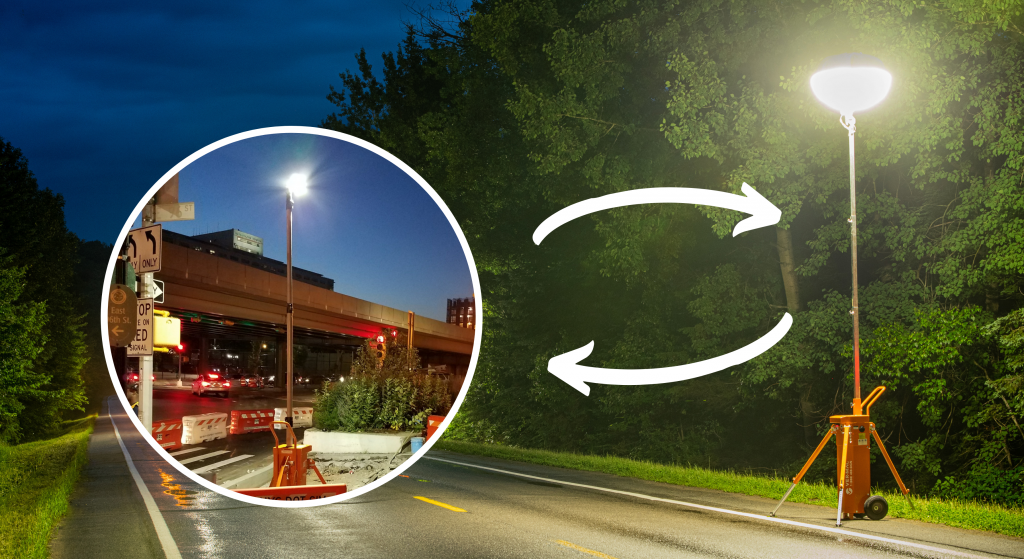
Lighting a construction site, compound or highway scheme without access to mains power presents both practical and regulatory challenges. Safety standards remain the same whether power is readily available or not. The solution must still deliver suitable and sufficient illumination, remain reliable in adverse conditions and align with environmental expectations.
Off grid lighting is no longer a compromise. Advances in solar, battery and hybrid systems mean temporary sites can achieve high-performance lighting without permanent infrastructure.
Why is off-grid lighting needed?
There are many scenarios where mains power is unavailable, impractical or uneconomical:
- Remote infrastructure projects
- Highway and utility works on live networks
- Wind and solar farms
- Early-stage site establishment before permanent supplies are installed
- Short term works where grid connection costs cannot be justified
- Emergency response situations
In these environments, lighting must be rapid to deploy, robust and self-sufficient.
Key considerations when lighting without mains power
Before selecting equipment, several factors should be assessed as part of the site risk assessment and lighting design.
Illuminance requirements
Lighting levels must match the task being carried out. General circulation areas, plant operation zones and detailed works all require different lux levels. Compliance with HSE guidance and relevant British Standards still applies, regardless of the power source.
Duration of operation
Is lighting required for a few hours each evening, throughout the night, or on a 24-hour basis? Duty cycles will determine battery capacity, recharge rates and system sizing.
Seasonal daylight variation
Winter months bring shorter days and lower solar gain. Off grid systems must be specified with sufficient battery storage and panel efficiency to maintain performance during darker periods.
Environmental conditions
Wind loading, uneven ground and exposure to traffic all influence mast height, stabilisation and positioning.
Noise and emissions constraints
Urban and residential projects often impose strict limits on noise and air quality. This may rule out traditional generator driven lighting.
Common off-grid lighting solutions
Solar lighting towers
Solar towers use photovoltaic panels to charge onboard batteries during daylight hours, powering high efficiency LED luminaires after dark. Modern systems are designed for low energy consumption, intelligent power management and extended autonomy.
Benefits typically include:
- No requirement for fuel deliveries
- Reduced carbon emissions
- Low operating noise
- Minimal maintenance compared to diesel units
- Rapid deployment and repositioning

Hybrid lighting towers
Hybrid systems combine solar panels with battery storage and a backup generator. The generator runs only when battery levels fall below a set threshold, significantly reducing fuel use compared to traditional units.
These systems can be suitable where lighting demand is high, or winter solar gain is limited.
Battery-only lighting units
In some short-term or lower demand applications, standalone battery lighting may be sufficient. These systems require periodic recharging via external power sources but eliminate on site emissions during operation.
Traditional diesel generator lighting
While still widely used, diesel towers present increasing challenges in relation to carbon targets, fuel logistics, noise and maintenance. Many clients now seek alternatives that align with sustainability commitments and net zero strategies.
Designing an effective off grid lighting layout
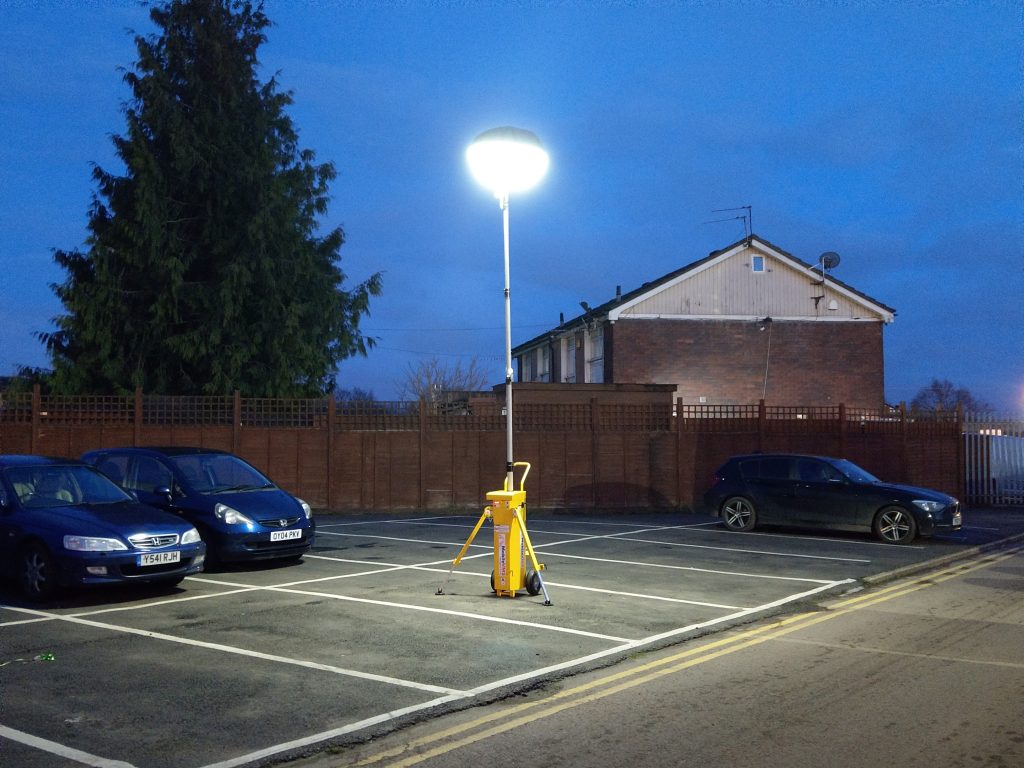
Selecting the right equipment is only part of the solution. Effective lighting design ensures safety, efficiency and cost control.
- Position towers to minimise shadowing from plant and structures
- Avoid glare to operators, road users and neighbouring properties
- Consider mast height and beam angle to achieve uniform coverage
- Allow safe access for repositioning or maintenance
- Integrate lighting planning into traffic management where relevant
Energy efficiency is central to off grid success. High output LED luminaires with controlled beam patterns reduce wasted light and improve battery performance.
Supporting sustainability objectives
Off grid lighting is increasingly linked to broader environmental and social value commitments. Solar and hybrid systems can:
- Reduce site carbon emissions
- Lower fuel transport movements
- Minimise noise in residential or sensitive areas
- Support contractor carbon reporting requirements
For infrastructure and highway projects, this aligns with client expectations around responsible delivery and long-term environmental impact.
Operational advantages
Beyond environmental benefits, off grid systems can improve operational efficiency.
- No reliance on grid connection schedules
- Reduced downtime linked to fuel shortages or generator faults
- Lower manual handling risk associated with refuelling
- Simplified compliance with environmental policies
For projects operating under tight programmes, the ability to deploy lighting quickly and relocate it as work progresses provides valuable flexibility.
Conclusion
Lighting an area without mains power requires careful planning but no longer demands compromise. Modern solar and hybrid lighting solutions deliver compliant, reliable illumination across construction, utilities and highway environments.
By matching lighting levels to task requirements, factoring in seasonal conditions and selecting energy-efficient systems, contractors can maintain safety standards while reducing emissions and operational burden.